
We Are The Witches - Colouring Room
Interactive art installation
FiLia BRighton 2025
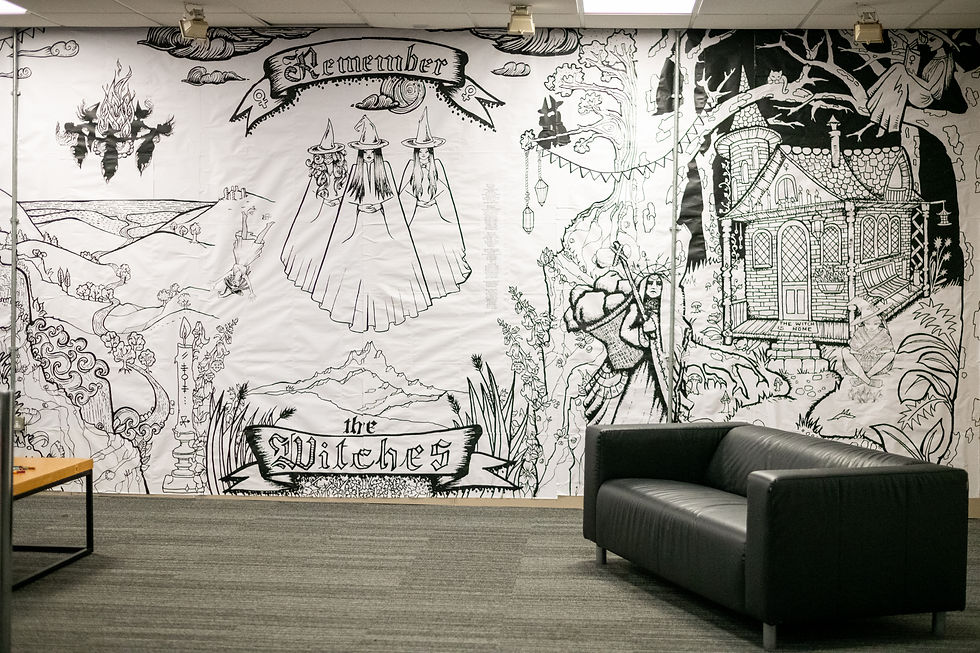
Originally published as a hand-drawn colouring book, We Are the Witches was reimagined by the artist as a large-scale, participatory installation for the FiLiA conference. Conceived as a space of rest within an intense political gathering, the work invited women to enter the book itself: walls covered from floor to ceiling with black-and-white witches, waiting to be coloured.
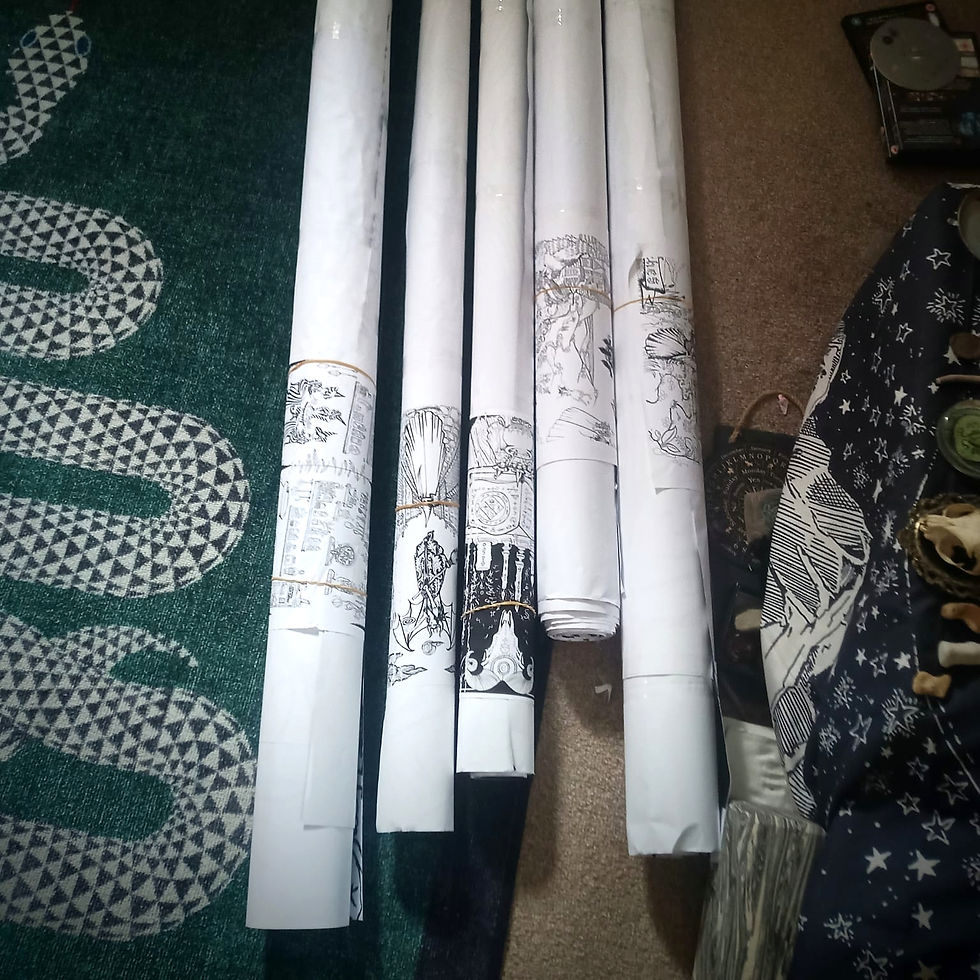
Created on a zero budget and constructed entirely by hand, the installation was built from hundreds of A3 prints assembled into monumental wallpaper, panel by panel. Faced with an all-brick venue, the artist devised a temporary, non-invasive structure using hand-cut grey boards and adhesive, allowing the work to exist without damaging the space.
Part sanctuary, part collective artwork, the installation offered a pause from debate and urgency — a tactile, shared act of making. Over months of solitary labour, the project moved from private cut-and-paste process to a public, immersive environment: a space made for women, by women.

(c) Pauline Makoveitchoux

(c) Pauline Makoveitchoux
(c) Pauline Makoveitchoux

Building

Behind the scenes - Angela C. Wild

Behind the scenes - Angela C. Wild

Behind the scenes - Angela C. Wild

Behind the scenes - Angela C. Wild

Behind the scenes - Angela C. Wild
Behind the scenes - Angela C. Wild


Taking doww
The dismantling of the room became a collective act. Improvised on the day, women were invited to take part in the cathartic process of bringing the installation down. Panels were carefully peeled away, hands meeting the surface one last time. Participants were also invited to cut out and take home any fragment of the work they chose, allowing the installation to continue its life beyond the room — carried into women’s homes across the world.


